

Silicone muffin cups, often underestimated in the realm of kitchen tools, offer a lot of convenience for both amateur and seasoned bakers. They’re not just for baking muffins. These cups can also be used as serving dishes for snacks or individual portions. And if you have a small dog, silicone muffin cup also can serve as a “water bowl.” Curious if they’re right for you? whether you’re a baking enthusiast or just looking for practical kitchen tools, silicone baking cups have more to offer than meets the eye.In this guide, we’ll explore everything you need to know about silicone muffin cups. We’ll talk about their features, how to use them, different sizes, fun culinary ideas, and tips for keeping them in great shape.
☰ Table of Contents ▼
-
I. What are Silicone Muffin Cups?
-
II. Advantages of Silicone Muffin Cups
-
III. How to Use silicone Muffin Cups
-
Ⅳ. Do You Need to Grease Silicone Muffin Cups?
-
Ⅴ. Size Variations
-
Ⅵ. Cooking Eggs and Poached Eggs in Silicone Muffin Cups
-
Creative Ways to Prepare Eggs Dishes
-
Step-by-Step Guide to Poaching Eggs in Silicone Muffin Cups
-
Ⅶ. Cooking Methods and Appliances
-
1. Exploring Various Cooking Methods with Silicone Muffin Cups
-
2. Using Silicone Muffin Cups in an Air Fryer: Dos and Don’ts
-
3. Baking in the Oven with Silicone Muffin Cups
-
4. Adapting Silicone Muffin Cups for Instant Pot Cooking
-
Ⅷ. Conclusion
🍰 I. What are Silicone Muffin Cups?
Silicone muffin cups, also known as silicone baking cups or silicone muffin liners, are versatile kitchen tools used for baking muffins, cupcakes, and various other baked goods. They have gained popularity in recent years due to their numerous advantages over traditional paper or metal muffin cups.These cups are typically made from food-grade silicone, a flexible and non-stick material that is heat-resistant and safe for use in ovens.
Silicone muffin cups come in various shapes and sizes, including standard, mini, jumbo, and more, making them suitable for different baking needs.They’re reusable, eco-friendly, and cost-effective. Their versatility extends beyond baking to serving snacks, making frozen treats, and serving as molds.
🍮II. Advantages of Silicone Muffin Cups
Have you heard about silicone muffin cups? Silicone muffin cups offer many advantages over traditional metal or paper liners. These nifty little cups offer so many benefits that make baking and cooking a breeze while also being eco-friendly. Cleaning is a breeze too, thanks to their non-stick properties. They’re heat resistant and can withstand high temperatures, making them a durable and reusable alternative to disposable liners.
| Advantages | Reasons |
|---|---|
| Reusable |
1. Reduces waste from disposable cups, promoting sustainability. 2. Saves money on buying disposable cups. |
| Non-Stick |
1. Prevents food from sticking to the cups, making removal and cleaning easy. 2. Eliminates the need for additional greasing or flouring. |
| Heat-Resistant |
1. Can withstand high baking temperatures without melting or releasing harmful substances. 2. Suitable for various baking and cooking purposes, such as muffins and cakes. |
| Easy to Clean |
1. Dishwasher-safe and easy to hand wash, saving time and effort. 2. Resists staining and remains easy to clean. |
| Variety of Colors and Shapes Available |
1. Provides a diverse range of aesthetic choices to cater to personal preferences. 2. Suitable for different occasions, such as parties and festivals. |
| Freezer and Microwave Safe |
1. Can be safely used in the freezer for freezing and in the microwave for heating. 2. Enhances versatility for handling various food processing needs. |
| Long-lasting |
1. Durable, resistant to wear and tear, and suitable for long-term use. 2. Reduces the need for frequent replacements, making it cost-effective. |
🍮III. How to Use silicone Muffin Cups
1. Preparing the Cups:
– Before using your silicone muffin cups for the first time, wash them thoroughly with warm, soapy water, and rinse well. This removes any potential manufacturing residues.
– If you have a brand new set of silicone muffin cups, it’s a good practice to “season” them by lightly oiling the interior with a neutral cooking oil or cooking spray. This step can help improve non-stick performance, although many silicone muffin cups are already quite non-stick.
2. Placing in Muffin Tin:
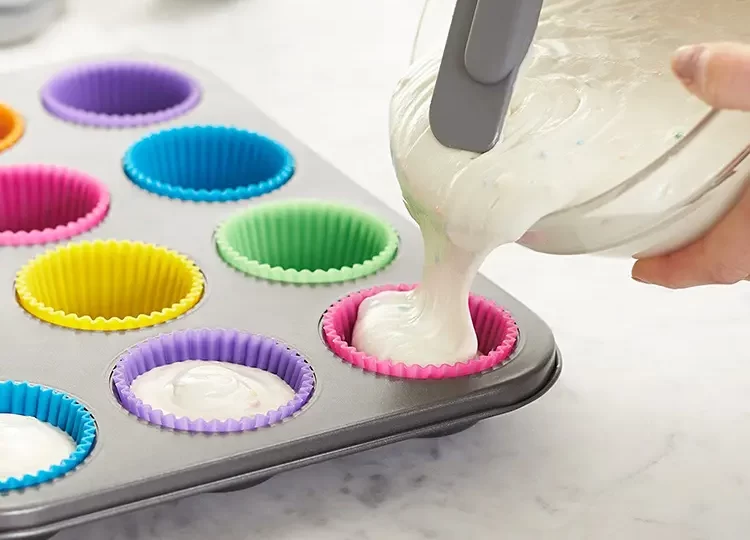
– While silicone muffin cups are flexible and can stand alone on a baking sheet, for stability and even baking, it’s often best to place them in a traditional metal muffin tin or on a sturdy baking sheet.
3. Filling the Cups:
– Fill the silicone muffin cups with your batter or mixture, leaving some space at the top for the baked goods to expand as they rise during baking. Typically, filling about two-thirds full is a good rule of thumb.
4. Baking Temperatures:
– Silicone muffin cups are heat-resistant, but it’s essential to check the manufacturer’s recommendations regarding maximum temperature limits. Most silicone cups can handle temperatures up to 450°F (232°C) or higher, suitable for most baking needs.
5. Baking Time:
– Follow your recipe’s recommended baking time and temperature, as silicone can sometimes bake items a bit faster than traditional metal pans. Keep an eye on your muffins or cupcakes, and use a toothpick or cake tester to check for doneness.
6. Cooling and Removal:
– Once your baked goods are done, allow them to cool for a few minutes in the silicone muffin cups. This makes removal easier and helps prevent sticking.
– To remove your muffins or cupcakes, gently press from the bottom of the cup to release them. The non-stick properties of silicone should make this process smooth.
7. Cleaning:
– After use, silicone muffin cups are easy to clean. You can wash them by hand with warm, soapy water, or they are usually dishwasher-safe for added convenience. Ensure they are completely dry before storing them.
8. Storage:
– Store your silicone muffin cups in a cool, dry place. They are often designed to be stackable or collapsible, making them easy to store without taking up much space.
🧀Ⅳ. Do You Need to Grease Silicone Muffin Cups?
In most cases, silicone muffin cups are naturally non-stick and do not need greasing, especially when baking standard muffins or cupcakes. However, there are instances where greasing these cups proves advantageous.
1. Batter Composition:
– The need for greasing largely depends on the composition of the batter or mixture you’re using. Some recipes, especially those with high fat content (like butter or oil), may not require greasing as the baked goods are less likely to stick to the silicone surface.
2. Complex Shapes and Designs:
– If you’re using intricate or highly detailed silicone muffin cups with elaborate shapes, greasing might help ensure that your baked goods release easily without damaging the design. Greasing is particularly useful when working with silicone molds for detailed chocolates or candies.
3. Extra Security:
– Greasing can provide an extra layer of security, especially when you’re baking delicate or sensitive recipes. For instance, when baking fragile cakes or soufflés in silicone cups, greasing can offer added insurance against sticking.
4. Personal Preference:
– Some bakers prefer the taste and texture of baked goods when a thin layer of grease or oil is applied to the cups. It can contribute to a slightly crispier exterior in certain recipes.
5. Aging Silicone Cups:
– Over time, silicone muffin cups may lose some of their non-stick properties due to wear and tear. If you notice that your older cups are not performing as well in terms of non-stick ability, greasing can be a helpful workaround.
6. Experimental Baking:
– If you’re trying a new recipe for the first time and are uncertain about how it will behave in silicone cups, you can choose to grease a few cups as a test to see if it improves the release of your baked goods.
7. Specific Recommendations:
– Always consider the recommendations provided by the manufacturer of your silicone muffin cups. Some brands may suggest greasing their products for best results, while others may confidently state that greasing is not required.
🥧Ⅴ. Size Variations
Did you know that silicone muffin cups come in all sorts of sizes? It’s pretty cool because you can find the perfect size to suit your baking needs and personal preferences. So, in this section, we’re going to dive into the world of silicone muffin cups and explore their different sizes. By understanding the size variations, you’ll be able to customize your baking to match your preferences and specific recipes.
| Type | Capacity Range | Ideal Use |
|---|---|---|
| Standard Size | Approximately 2.5 to 3 ounces of batter | Suitable for baking standard-sized muffins or cupcakes, and works well with most recipes. |
| Mini Size | Approximately 1 to 1.5 ounces of batter | Ideal for making mini-sized treats, perfect for parties, snacks, or creating small portions of desserts. |
| Jumbo Size | Approximately 6 to 8 ounces of batter | Great for baking oversized muffins or cupcakes, perfect for those who prefer more substantial servings. |
| Large Size | Approximately 4 to 5 ounces of batter | Strikes a balance between standard and jumbo sizes, suitable for those who want a heartier muffin. |
| 12-Cup Silicone Muffin Pans | Each cup holds about 2.5 to 3 ounces of batter | Convenient for baking a dozen standard-sized muffins or cupcakes simultaneously, suitable for batch baking. |
| 6-Cup Silicone Muffin Pans | Each cup holds about 4.5 to 5 ounces of batter | Excellent for smaller batches, suitable for smaller ovens, and can also be used for making larger muffins or cupcakes. |
| Extra Large Silicone Muffin Cups | Approximately 8 to 10 ounces of batter | Designed for unique baking needs, can hold significantly more batter, suitable for oversized muffins, individual frittatas, or creative baked desserts. |
🥓Ⅵ. Cooking Eggs and Poached Eggs in Silicone Muffin Cups
Silicone muffin cups are not limited to baking muffins and cupcakes; they are incredibly versatile for cooking eggs and creating a variety of egg-based dishes. In this section, we will explore the creative ways to cooking eggs, and some a step-by-step guide, discuss how to craft delicious egg bites.
🍰1. Creative Ways to Prepare Eggs Dishes
a. Scrambled Egg Delights:
Whisk together eggs, blend in your favorite ingredients like cheese, veggies, or bacon, and pour the mixture into silicone muffin cups. Bake for delightful mini scrambled egg cups.
b. Quiche Minis:
Whether you fancy a classic pastry-crust quiche or a crustless version, silicone muffin cups can be your go-to for crafting adorable mini quiches.
c. Eggciting Muffins:
Get creative with savory egg muffins by incorporating spinach, cheese, and mushrooms for a hearty twist. For those with a sweet tooth, whip up delectable egg muffins with a medley of berries and a drizzle of honey, turning breakfast into a delightful treat.
🍰2. Step-by-Step Guide to Poaching Eggs in Silicone Muffin Cups:
| Step | Instructions | Tips and Notes |
|---|---|---|
| 1 | Grease the cups lightly. | Use a small amount of oil or cooking spray to prevent sticking. This ensures easy egg release after poaching. |
| 2 | Crack one egg into each cup. | Crack the egg carefully to avoid breaking the yolk. You can crack the egg into a separate bowl first and then transfer it to the cup for better control. |
| 3 | Season with salt, pepper, or desired extras. | Customize your poached eggs by adding seasonings like salt, pepper, herbs, or grated cheese. Be creative with your flavors. |
| 4 | Place cups in simmering water bath. | Use a pot or baking dish with enough simmering water to cover at least half of the silicone cups. Ensure that the water level is just below the rim of the cups to prevent overflow. |
| 5 | Cover and cook over low-medium heat. | Covering the pot or baking dish helps trap steam and cook the eggs evenly. Poaching times can vary based on your preferred doneness, typically 4-6 minutes for a runny yolk, but adjust according to your taste. |
| 6 | Remove cups, release eggs, and serve. | Carefully lift the silicone cups out of the water bath, using oven mitts or tongs. To release the poached egg, gently slide a knife around the edge of each cup and let it slide onto a plate. Be cautious as the cups and eggs may be hot. |
Besides,cooking eggs in silicone muffin cups or pans allows endless customization of your favorite egg dishes, like mini frittatas, crustless quiches, or egg and veggie muffins.
🔥Ⅶ. Cooking Methods and Appliances
Silicone muffin cups are versatile kitchen tools that can be used with various cooking methods and appliances, allowing you to expand your culinary repertoire. Whether you’re air frying, baking, steaming, microwaving, or using your Instant Pot, these cups can help you create a wide range of delicious dishes and treats.In this section, we will explore the different cooking methods that you can use with silicone muffin cups, as well as the dos and don’ts when using them.
🍳1. Exploring Various Cooking Methods with Silicone Muffin Cups:
– Baking:The most common method, suitable for muffins, cupcakes, and other baked goods.
– Steaming:Ideal for making steamed desserts or savory dishes like puddings or dumplings.
– Microwaving: Use silicone muffin cups for quick microwave meals like mug cakes or reheating leftovers.
– Freezing:Create homemade ice cubes, frozen yogurt bites, or mini popsicles.
– Sous Vide: Some silicone muffin cups can withstand sous vide cooking for precision temperature control.
🍗2. Using Silicone Muffin Cups in an Air Fryer: Dos and Don’ts:
– Do Use Heat-Resistant Silicone: Ensure your silicone muffin cups are heat-resistant and suitable for air fryer temperatures, typically up to 450°F (232°C) or higher.
– Do Place Cups in the Basket: Place the silicone muffin cups inside the air fryer basket, leaving enough space between them for proper air circulation.
– Do Monitor Baking Times: Air frying can cook faster than traditional baking, so keep a close eye on your baked goods and adjust the cooking time accordingly.
– Don’t Overfill Cups: Avoid overfilling the cups, as this can lead to uneven cooking or spills in the air fryer.
– Don’t Use Paper Liners: Avoid using paper liners in the air fryer, as they may not hold up well to the high heat.
🍞 3. Baking in the Oven with Silicone Muffin Cups:
– Preheat your oven to the desired temperature as per your recipe.
– Place the silicone muffin cups in a metal muffin tin or directly on a baking sheet for stability.
– Fill the cups with your batter or mixture and bake according to your recipe’s instructions.
– Keep an eye on your baked goods, as silicone can sometimes bake items a bit faster than traditional metal pans.
🥘4. Adapting Silicone Muffin Cups for Instant Pot Cooking:
– Ensure your silicone muffin cups are heat-resistant and safe for pressure cooking.
– Place a trivet or steam rack in the Instant Pot and add water for steam.
– Set the silicone muffin cups on the trivet, ensuring they are not submerged in water.
– Cook your recipe using the Instant Pot’s appropriate settings, following the recommended cooking times.
🧼Ⅷ. Conclusion
In the fast-paced world of modern cooking, silicone muffin cups stand out as kitchen tools. Their vivid hues guarantee effortless identification within your pantry. These cups are ideal for serving fruits, vegetables, nuts, and snacks in optimal portions, while also imparting a festive touch to appetizers, dips, and sauces. Moreover, they possess the added advantage of being adaptable molds for crafts and decorations, extending their utility beyond the culinary realm. A necessary addition to your baking supplies or silicone collection, they also make for a delightful gift. Do not overlook the convenience and versatility that silicon muffin cups offer in your kitchen. Seize the opportunity today and embrace the myriad possibilities they bring to your culinary endeavors.